

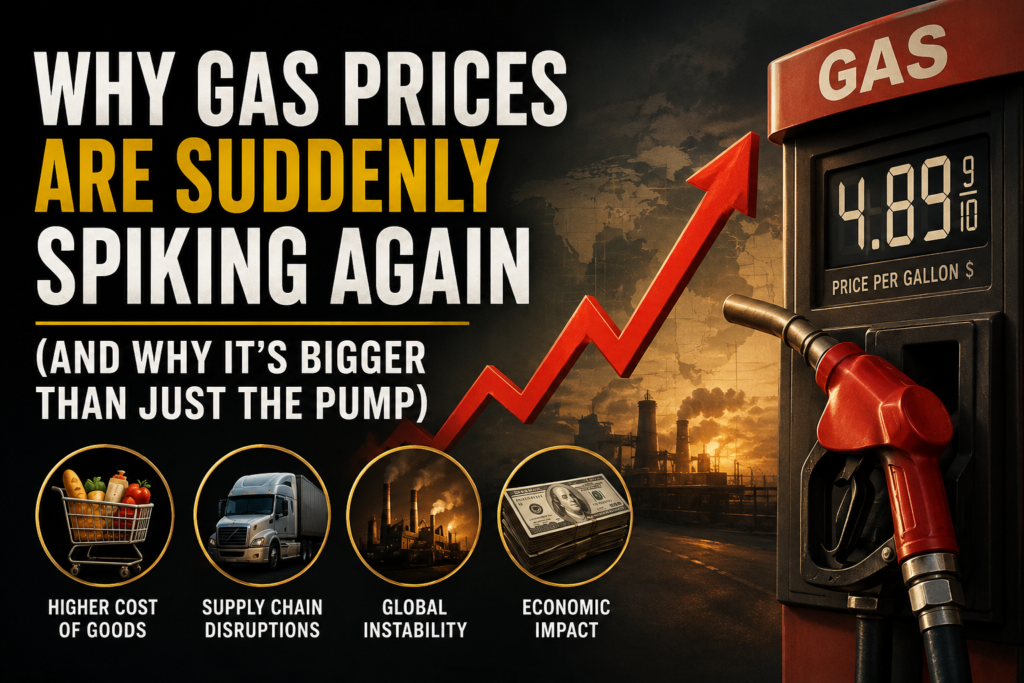
Okay so if you filled up your tank this week and did a double take at the total, you’re not losing your mind. Gas prices have been creeping up hard the last few days, and honestly, most people scrolling past the headlines have no idea why. Let’s fix that, because this one actually touches basically every corner of your budget, not just your car.So what’s actually going on?Short version: things got messy in the Middle East again. A militant group backed by Iran claimed attacks on oil tankers near Saudi Arabia, and that’s exactly the kind of news that makes oil traders panic-buy. Oil prices jumped hard on the news, and when oil goes up, gas at your local station follows pretty much immediately, sometimes within days.The stock market felt it too. The Dow, S&P 500, and Nasdaq all dropped this week, with tech stocks getting hit especially hard after some rough earnings reports piled on top of the oil news. So we’ve got a one-two punch: rising energy costs plus a shaky stock market, happening at the same time.Why should you actually care?Here’s the thing people miss: oil isn’t just about your gas tank. It’s baked into almost everything.Trucking and shipping costs go up, so groceries and everyday goods get pricierAirlines pass fuel costs onto ticket pricesManufacturing costs rise for anything plastic-based (yep, oil is in way more products than you’d think)Heating costs tend to follow too, which matters once fall rolls aroundAnd there’s a bigger domino effect. Just as inflation had actually started cooling off a bit (June’s numbers looked genuinely encouraging), rising oil prices threaten to undo that progress. That puts the Federal Reserve in an awkward spot. They’ve been walking a tightrope between fighting inflation and not choking off growth, and a fresh oil shock makes that balancing act way harder.What does this mean for your everyday money moves?You don’t need to panic, but a few things are worth thinking about right now:Budget for higher gas and grocery costs over the next few months. If oil stays elevated, expect it to show up in your weekly shopping trip, not just your commute.Don’t make emotional investing decisions. Markets are jumpy right now, and it’s tempting to sell when you see red numbers. Historically, reacting to short-term geopolitical scares tends to hurt long-term investors more than it helps them.Keep an eye on interest rates. If inflation ticks back up because of oil, the Fed’s upcoming meeting decisions could shift, which affects everything from mortgage rates to credit card APRs.If you drive a lot for work, this is a good time to actually track your fuel spending. Small leaks add up fast when prices are volatile.The bottom lineThis isn’t really a “scary headline for scary headline’s sake” situation, it’s a genuine reminder of how connected global events are to your personal budget. A conflict thousands of miles away can quietly reshape your grocery bill, your gas fill-up, and even the interest rate on your next car loan. You don’t need to obsess over oil futures, but staying aware of the ripple effects is just smart money management in 2026.Keep your eyes on your everyday spending over the next few weeks. If prices at the pump keep climbing, it might be the nudge to finally build (or pad) that emergency fund a little more.