

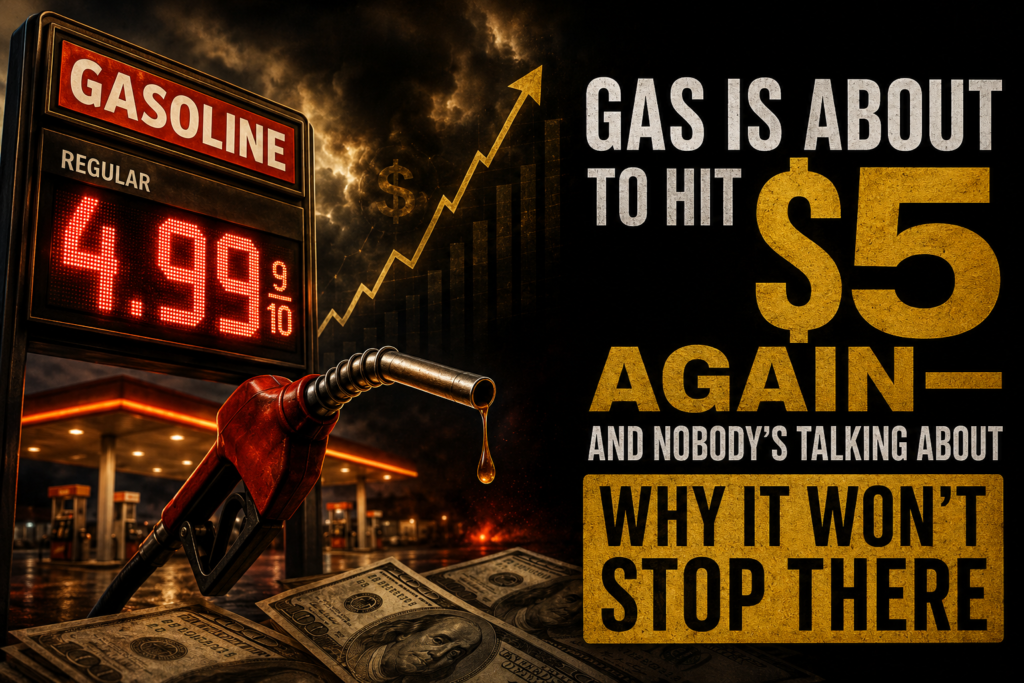
I filled up my tank yesterday and just about choked on the total.
$4.71 a gallon. In a state that was averaging $3.60 six weeks ago.
If you’ve felt that same gut-punch at the pump lately, you’re not imagining things, and you’re definitely not alone. Brent crude just pushed back above $90 a barrel as the U.S.-Iran situation rolls into its tenth straight day, and while the news anchors are busy talking about “diplomatic efforts” and “geopolitical risk,” what they’re not telling you is how this actually lands on your kitchen table.
So let’s talk about it. No spin, no fear-mongering for clicks — just the math nobody wants to walk you through.
This Isn’t Just About Gas
Here’s the thing people miss every single time oil spikes: it’s never just about gas.
Oil is baked into almost everything you buy. Diesel moves the trucks that stock your grocery store shelves. Plastic packaging comes from petroleum. Fertilizer for the crops in your cereal? Oil-based. Even the delivery fee on your late-night takeout order quietly climbs when fuel costs go up, because somebody has to eat that cost — and it’s usually you.
So when you see headlines about oil “climbing back above $90,” don’t file that under “not my problem.” File it under “my grocery bill next month.”
We’ve been here before. Every time energy prices spike, it takes about 4-6 weeks to fully work its way through the economy — first at the pump, then in shipping costs, then finally on store shelves. If this Iran situation drags on (and ten days in, with strikes still happening, it’s not looking like a quick resolution), we could be looking at a rough autumn for household budgets.
Why Wall Street Isn’t Panicking (And Why That Should Worry You More)
Funny thing — the stock market barely blinked. Chip stocks are actually rebounding, the Nasdaq’s up, and there’s this weird disconnect where equities are climbing while oil is spiking and a literal shooting conflict is happening in the Middle East.
That disconnect is worth sitting with for a second.
Wall Street isn’t optimistic because things are fine. It’s optimistic because big institutional money has already positioned itself to absorb — or even profit from — exactly this kind of volatility. Energy stocks, defense contractors, certain commodity plays — somebody’s making money off this. It’s usually not the guy filling up his Honda Civic on the way to his second shift.
This is the part that gets me every time: the same event can be genuinely bullish for a hedge fund’s portfolio and genuinely brutal for a family’s grocery budget. Both things are true at once. Nobody’s lying to you exactly — they’re just not talking to you. The market commentary is written for people who own the assets, not the people paying the prices.
What Actually Helps Right Now
I’m not going to sit here and tell you to “just budget better” — that advice is tired and honestly a little insulting when the ground is shifting under everyone’s feet at once. But there are a few things worth doing while this plays out:
Lock in what you can. If you’ve got a long drive coming up, fill up sooner rather than later. Prices at the pump tend to overshoot on the way up before they ever correct.
Watch your grocery bill like a hawk. Not to stress about it — just to notice which categories are creeping up. Packaged and shipped goods (basically anything that isn’t local produce) will feel this first.
Don’t panic-sell anything. If you’ve got investments and you’re watching oil headlines and getting nervous, remember: short-term energy shocks and long-term portfolio decisions live on completely different timelines. Reacting emotionally to a ten-day-old conflict is usually how people lock in losses they didn’t need to take.
Keep an eye on the Fed’s tone. Energy-driven inflation is exactly the kind of thing that can push interest rate decisions around, which affects everything from your credit card APR to whether that mortgage refinance you’ve been eyeing makes sense this year or next.
The Bigger Pattern Here
I keep coming back to this idea, and I’ll probably keep writing about it because it keeps proving true: the gap between “the economy” as it gets reported and “the economy” as regular people actually live it keeps widening.
GDP can look fine. The S&P can be green. And your actual take-home dollars can still buy less than they did last quarter. Both stories are real. They just don’t get told with equal volume.
If gas prices climbing and a slow-burn conflict overseas feel like background noise to you right now, I get it — there’s a lot competing for our attention these days. But this is one of those slow-moving stories that’s worth watching, because by the time it’s loud enough to be the top headline everywhere, it’s already hit your wallet weeks ago.
Stay sharp out there.
— Marcus